 0804581565808045815658
 Send Inquiry


 English
 Spanish
 French
 German
 Italian
 Chinese (Simplified)
 Japanese
 Korean
 Arabic
 Portuguese
 Get A Quote
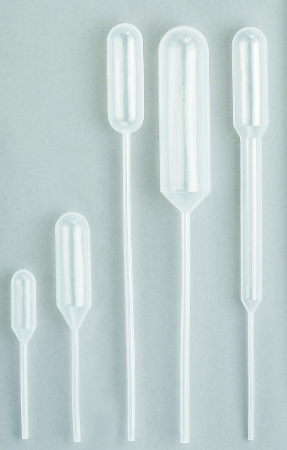
Narrow Stem Transfer Pipettes
Product Details:
- Features Disposable, clear, non-toxic, flexible, easy to use, chemically inert
- Temperature Resistance Up to 80°C
- Shape Narrow Stem
- Control Type Manual
- Speed Range Manual operation
- Accuracy Suitable for standard liquid transfer operations
- Type Narrow Stem Transfer Pipette
- Click to view more
X
Narrow Stem Transfer Pipettes Price And Quantity
- 3 Piece
Narrow Stem Transfer Pipettes Product Specifications
- Up to 80°C
- Polyethylene (PE)
- Manual Liquid Handling
- Narrow Stem
- Approx. 3 mL
- Disposable, clear, non-toxic, flexible, easy to use, chemically inert
- Suitable for standard liquid transfer operations
- Low-Density Polyethylene (LDPE)
- Narrow Stem Transfer Pipette
- Varies (commonly 150 x 6 mm)
- Precise liquid transfer, laboratory analysis, sample preparation
- Manual
- Manual operation
- Available in sterile and non-sterile formats
- Typically 100 or 500 pieces
- Translucent for visual monitoring of sample
- Yes, disposable
- Fine tip for controlled dispensing
- Natural (uncolored)
- No
- Resistant to most acids and aqueous solutions
- Yes, for approximate measurement
Narrow Stem Transfer Pipettes Trade Information
- 3-4 Piece Per Day
- 3-4 Week
Product Description
Narrow Stem Transfer Pipettes
Eliminate plugging, packaging and autoclaving with Narrow Stem Transfer Pipettes. These polyethylene pipettes prevent cross-contamination and are used for blood bank applications such as sedimentation procedures. The single-unit design features a built-in pipette bulb, and a flexible stem bends to sample from narrow or small tubes.
Description
- Made of shatterproof, nontoxic polyethylene
- Low-affinity surface reduces loss of cells and valuable proteins due to binding
- Can be frozen in liquid nitrogen, or heat sealed for storage
Precision and Control for Laboratory Tasks
These narrow stem pipettes feature a fine tip and graduation markings, allowing users to transfer and measure liquids with heightened control. Their flexibility and chemical resistance make them essential tools for laboratories working with a broad range of substances.
Convenient, Disposable Design
Designed as single-use items, these pipettes simplify workflow and reduce contamination risks. Each pipettes construction from clear, non-toxic LDPE ensures safety, and options for both sterile and non-sterile use accommodate varied laboratory protocols.
Versatile Application and Reliable Performance
Resistant to most acids, these pipettes are widely applicable across laboratories, research institutions, and educational settings. They withstand temperatures up to 80C, making them compatible with many standard laboratory operations.
FAQs of Narrow Stem Transfer Pipettes:
Q: How do I properly use a narrow stem transfer pipette for approximate measurements?
A: To use the pipette, gently squeeze the bulb to draw up liquid to the desired graduation marking, then release the liquid as needed for controlled dispensing. Graduation marks allow for approximate volume measurement, but they are not intended for high-precision analytical work.Q: What are the benefits of choosing these pipettes for laboratory applications?
A: These transfer pipettes are disposable, reducing cross-contamination risks. Their fine tip offers controlled dispensing and chemical resistance makes them suitable for handling a broad spectrum of laboratory reagents, particularly acids and aqueous solutions.Q: When should I select a sterile versus a non-sterile format?
A: Choose sterile pipettes for applications where aseptic technique is crucial, such as in microbiology or cell culture. Non-sterile pipettes are adequate for routine liquid transfers not involving sensitive biological samples.Q: Where can these pipettes be used most effectively?
A: They are ideal for laboratories, research facilities, educational institutes, and in any context where precise, single-use liquid handling is required, such as sample preparation or qualitative analysis.Q: What is the process for safely disposing of used pipettes?
A: After use, dispose of the pipettes according to your facilitys biomedical or laboratory waste protocols, as the product is intended for single use and is not autoclavable.Q: Are these pipettes compatible with all types of chemicals?
A: They are resistant to most acids and aqueous solutions, but users should verify compatibility with specific substances before use, as they are not guaranteed to withstand all organic solvents.Q: What makes these pipettes easy to use for laboratory staff?
A: Manufactured from flexible, clear LDPE, the pipettes provide good visibility of the sample and allow easy manual control. Their single-use format and availability in bulk packs also enhance efficiency.Tell us about your requirement

Price:
Quantity
Select Unit
- 50
- 100
- 200
- 250
- 500
- 1000+
Additional detail
Mobile number
Email

Other Products in 'Pipettes And Pipette Tips' category

Contact Us

- Kesarkunj, Room No. 9, 2nd Floor, Vasanji Lalji Road, Kandivali Station Road, Kandivali (West), Mumbai - 400067, Maharashtra, India
- Phone : 08045815658
NATIONAL ANALYTICAL CORPORATION
GST : 27AWSPS9814L1ZF
GST : 27AWSPS9814L1ZF

- Mr Dharmik Shah (Proprietor)
- Mobile : 08045815658
- info@nationalsales.co
- Email : info@nationalsales.co

Our Products
- Laboratory Machines Spare Parts And Kits
- Laboratory Chemicals
- UV Visible Spectrophotometer
- Visible Spectrophotometer
- FTIR Spectrophotometer
- Atomic Absorption Spectrophotometer
- HID Xenon Lamps
- Autosampler Vials, Caps And Closures
- Hand Held Refractometers
- Laboratory Platinum Ware
- PH Meter
- Conductivity Meter
- Dissolved Oxygen Meter
- Color Measurement Instruments
- Digital Ultrasonic Cleaner
- Laboratory Blenders
- Laboratory Microscopes
- Hollow Cathode Lamp
- Digital Anemometer
- HPLC Columns
- Reference Standards
- Rheodyne Injectors & Spares
- Sound Level Meter
- Digital Stroboscope
- Filtration Products
- Brookfield Viscometer
- Brookfield Viscosity Standards
- Electrophoresis System
- Syringe Filter Holders
- Vacuum Pump
- Nucleic Acid Electrophoresis Cell
- Gel Documentation System
- UV Transilluminator
- PCR Genemate Series
- FTIR And IR Sample Cards
- IR Crystal Optics
- Sealed Liquid Spectrophotometer Cells
- Demountable Liquid Cell
- Flow Temperature Controlled & Pressure Cells
- Gas Cells
- Infrared Accessories
- Reconditioning Of Cells ATR Prisms Crystal Window
- Intrinsic Dissolution Apparatus
- Solid Sampling & KBr Presses
- Laboratory Grinding Mills
- Polymer Film Maker
- Internal Reflection Accessories
- Temperature Controllers
- Hydrocarbon Testing Kit
- UV/VIS Spectrophotometer Cells & Cuvettes
- Stability Chamber
- Digital Colony Counter
- Weighing Balances
- Flame Photometer
- Microscope Camera
- Vortex Shaker
- ROCKER Lab Instruments
- Rotary Mixer
- Vacuum Desiccator
- Bench Protector
- Lab Soakers
- Micro Centrifuge
- Digital Planimeter
- Rotary Evaporator
- Cold Trap Bath
- Electric Aspirator
- Sodium Ion Concentration Meter
- Colour Reference Standard
- Digimatic Micrometer
- PH Pocket Tester
- Flash And Fire Point Apparatus
- Pure Mercury 99.5%
- Hypersil Column
- Inertsil HPLC Columns
- GC & GC/MS Columns
- LC & LC/MS Columns
- Membrane Filter Paper
- PYROCHROME KINETIC CHROMOGENIC ENDOTOXIN TESTING
- LAL Reagent Water
- BETA GLUCAN INHIBITING BUFFER
- Arsenic Apparatus
- Distillation Apparatus
- FINNPIPETTE F2 VARIABLE SINGLE CHANNEL PIPPETTE
- FINNPIPETTE F2 VARIABLE VOLUME MULTI CHANNEL
- LAL REAGENT RESERVOIR
- COLONY COUNTER MODEL GALAX
- TABLET HARDNESS TESTER
- HPLC REAGENT BOTTLE CAP
- SILICA CRUCIBLES & LIDS (FUSED)
- HYGROMETER MECHANICAL
- TORQUE TESTER
- THERMO SCIENTIFIC SPECTRONIC* 200 Spectrophotomete
- THERMO SCIENTIFIC SPECTRONIC* 15 VISIBLE SPECTROPH
- 96 WELL PLATE WITH LEAD
- SHIMADZU MAKE- UV-VISIBLE SPECTROPHOTOMETER
- FALLING BALL VISCO METER
- SINGLEE CHANNEL REAGENT RESERVOIR
- 12 CHANNEL RESERVOIR
- SMARTALERT SOLVENT FRONT MONITER
- TWIN TROUGH CHAMBER
- FLAT BOTTOM CHAMBER GLASS DEVELOPMENT
- LINT FREE CLOTH
- BURNER SYSTEM COMPONENTS
- PERKIN ELMER LUMINA HOLLOW CATHODE LAMP
- AUTOSAMPLER CUPS AND SUPPLIES
- THGA GRAPHITE TUBES
- HGA GRAPHITE TUBES
- PERKIN ELMER SPRAY CHAMBERS
- TORCH MODUL;ES AND HARDWARE
- GLASS BEADS / POLYDISPERSE PARTICLE STANDARDS
- Sampler and Skimmer Cones for NexION 300 ICP-MS
- FANN VISCOMETER BF35 Viscometer
- NICKEL BOWLS
- NICKEL CRUCIBLES
- NIKLE DISHES
- TEMPERAURE CONTROL BATHS
- POLARIMETER CYLINDRICAL 10MM X 10MM CELL
- POLARIMETER CYLINDRICAL 10MM X 50MM CELL
- POLARIMETER CYLINDRICAL 10MM X 100MM CELL
- POLARIMETER CYLINDRICAL 3.5MM X 10MM CELL
- POLARIMETER CYLINDRICAL 3.5MM X 100MM CELL
- ON-SITE TESTING FOR TOTAL CHLORINE IN USED OIL
- BOMB CALORIMETER RSB-FIVE
- GLASS VACCUM DESICATOR WITH TAP
- SPECTOPHOTOMETER
- FLAMMABLE FLAME PROOF CABINET
- LASER PARTICLE COUNTER
- Abbe Refractometer NAR-4T
- AUTOMATIC POTENTIAL TITRATOR
- CONVENIENT HYDROLYSIS AND DERIVATIZATION
- LIQUID STIRRER
- SPE CATRIDGE
- SPE COLUMNS
- SPE TUBE ACCESSORIES
- SPE VACCUM MANIFOLDS & ACCESSORIES
- POLYBOND HIGH PERFORMANCE GC CAPILLARY COLUMNS
- Polycil HPLC Column
- BENCH DISSOLVED OXYGEN METER
- LABORATORY GRINDER
- 20210 API 20 C AUX
- PARAFILM ROLL
- HAND REFRACTOMETER
- SHIMADZU HPLC L2D2 DETEURIUM LAMP ORIGINAL L2D2
- GAS CHROMATOGRAPH TRACE 1110 SERIES THERMO
- QUARTZ CELL
- BIOLOGICAL INDICATORS
- CUVETTES
- MOBILE PHASE FILTER INLET
- MECHANICAL STOP WATCH
- ICE 3300 AA SPECTROMETER (WIDE PMT)
- GAS GENERATOR
- MITUTOYO DIGIMATIC MICROMETER
- SYRINGE FILTER HOLDER
- MILLIPORE MEMBRANE FILTER PAPERS
- Beam Condensers
- SHEEN MAKE PENDULUM HARDNESS TESTER
- ABRASION
- ADHESION
- APPLICATION
- PYKNOMETER
- HARDNESS TESTERS
- FINENESS OF GRIND GAUGES
- DRYING TIME
- BEND TESTER
- COROSSION CONTROL
- VISCOCITY PRODUCTS
- AUTOMATED SAMPLING
- ATR PRODUCTS
- SHIMADZU BALANCE
- SHIMADZU ATOMIC ABOSRPTION SPECTROPHOTOMETER
- ELECTRONIC MICRO BALANCE
- LAB DISC ULTRA-FLAT MAGNETIC STIRRERS
- WATER RECIRCULATING CHILLER
- HITACHI FLUORESCENCE SPECTROPHOTOMETER
- ULTRA CENTRIFUGE
- Omni Cell System
- Nitrogen Generator
- air generator
- SYRINGES
- GAS CHROMATOGRAPHY & GC/MS
- Cary 100 UV-VIS SPECTROPHOTOMETER
- 1220 Infinity LC System
- 1260 Infinity Quaternary LC System
- 1290 Infinity Binary LC System
- ICP - MS, ICP Multi-Element Standards
- Ion Chromatography Standards
- IC Multi-Element Standards
- Atomic Absorption Standards
- Flame Photometry Standards
- Volatile Organic Compounds
- Phenols
- Polycyclic Aromatic Hydrocarbons (PAHs)
- Colour Standards
- Cryoscope Standards
- ANALYTICAL BALANCES
- SHIMADZU DOUBLE BEAM UV SPECTROPHOTOMETER
- SHIMADZU SINGLE BEAM UV-SPECTROPHOTOMETER
- ALPHA-T FT-IR Spectrometer
- PFXi-195/1 Colorimeter with RCMSI Pack
- GATED INTEGRATORS AND BOXCAR AVERAGERS
- OLYMPUS MICROSCOPE
- UVFS WINDOWS
- GE WINDOWS
- SILICON WINDOWS
- MgF2 WINDOWS
- BAF2 WINDOWS
- OPTICLE ELEMENT
- INFRARED SPECTROMETER ACCESSORIES
- LABORATORY HYDRAULIC PRESS
- PELLET PRESS PRODUCTS
- WIRE GRID POLARIZERS
- LC 100 & SV 100 SPECTROCOLORIMETER
- NC45, NON-CONTACT
- RT250-300-400-500 PORTABLE REFLECTANCE
- SCROLL COMPRESSORS
- OIL FREE AIR COMPRESSORS
- PH Electrodes
- STERILIZATION INDICATORS
- Transmitter
- MELTING POINT APPARATUS
- TISSUE GRINDER
- AGROMETEOROLOGICAL INSTRUMENT
- SOIL TESTING INSTRUMENT
- PLANT PHYSIOLOGY INSTRUMENT
- FRUIT SCLEROMETER
- CROP QUALITY INSTRUMENT
- SEED TESTING INSTRUMENT
- FLOUR AND OIL TESTING INSTRUMENT
- PURITY TESTER
- QUARTZ GLASS CELL
- Abrasive cutters
- PRECISION SAWS
- MICROWAVE DIGESTION SYSTEMS
- Agilent HPLC Column
- HPLC PUMP , DETECTOR AND ACCESSORIES
- UPLC COLUMN
- WATERS UPC2 COLUMN
- WATERS SFC COLUMN
- WATERS APC COLUMN
- WATERS GPC AND SEC COLUMN
- WATERS NANO OR MICRO SCALE COLUMN
- TURBOPUMPS
- TURBO PUMP CONTROLLERS
- GRINDING / POLISHING MACHINE
- HPLC SETS WITH BOTTLE
- HPLC WASTE SAFETY CAPS
- Dionex HPLC Column
- HOLMIUM OXIDE FILTER
- HELLMA ABSORPTION CELL
- WASHERS FOR COMPONENT & EQUIPMENT PROCESSING
- MANIPULATION
- DPTE TRANSFER SYSTEM
- LEAK TESTERS
- BIOMEDICAL RESEARCH
- PACK RELEASE STEAM STERILIZERS
- STEAM TAPE
- FRIT
- SELF SEALING FILTER
- FILTER FOR PIPETTE TIPS
- SPE CARTRIDGE
- MULTI-GAS EMISSIONS ANALYSER
- TRANSMISSION RATE TEST SYSTEM
- Moisture Meter
- STANDARD LABORATORY OVENS CARNAC
- HIGH TEMPERATURE OVENS CARNAC
- CLEAN ROOM OVENS
- APPLICATION SPECIFIC OVENS
- INDUSTRIAL BATCH OVENS
- LABORATORY CHAMBER FURNACES CARNAC
- ASHING CHAMBER FURNACES
- TUBE FURNACE CARNAC
- 3 ZONE TUBE FURNACES
- APPLICATION SPECIFIC FURNACES
- INDUSTRIAL FURNACE MODELS FOR BATCH PROCESSING
- LABORATORY CHAMBER FURNACES 1300 TO 3000 CARNAC
- HIGH TEMPERATURE LABORATORY TUBE FURNACES
- HIGH TEMPERATURE APPLICATION SPECIFIC FURNACES
- ANNEALING & TUBE FURNACES
- TUBE FURNACE FOR OPERATION UP TOI 1800C CARNAC
- CHAMBER FURANCES FOR HIGH TEMPERATURE
- TOP HAT FuURNACES
- BOTTOM LOADING FURNACES
- LABORATORY FURNACES
- APPLICATION SPECIFIC FURNACES (BV-HTRV)
- CARBON / HYDROGEN / SULFUR ANALYZERS - C H S
- SPATULA
- NAC BIN CO2 incubators
- NACBIN ULTRA LOW TEMPERATURES FREEZERS
- NACBIN incubators and cooled incubators
- NACBIN climate chambers with illumination and humi
- NACBIN MATERIAL TEST CHAMBERS
- NACBIN safety drying ovens
- NACBIN Heating oven with mechanical control
- Environmental simulation chamber for cyclical temp
- Vacuum drying oven for non-flammable solvents
- AGILENT FRIT
- VISCOMETER
- RHEOMETER
- TEXTURE ANALYZER
- SAFETY BUNSEN BURNER
- WET-PENETRATION-TEST
- INOCULATING LOOPS FLAME STERILIZABLE
- KJEDAHL DIGESTION UNITS
- KJEDAHL DISTILLATION UNITS
- RAW FIBER ANALYZERS
- DIETARY FIBER ANALYZERS
- DUMAS NITROGEN/PROTEIN ANALYZERS
- COD ANALYSIS
- BOD ANALYSIS
- FLOCULATORS
- TEST KITS
- ICP-ACCESSORIES
- UV-LAMPS
- NMR SOLVENTS ANALYSIS
- NMR TUBES
- LABORATORY GAS BURNER
- MAGNETIC STIRRER
- TEST TUBES
- PHOTOMETER
- POOLTESTER
- ELECTRONIC METER
- VISCOMETER ACCESSORIES
- PTFE CONTAINERS
- PTFE JOINTWARE
- PTFE CONNECTORS,VALVES AND STOPCOCKS
- PTFE TEMPERATURE PROBE
- sieve shakers
- GPC/SEC COLUMNS
- POLYMER STANDARDS & REFERENCE STANDARDS
- SODIUM ANALYZER
- GLASS FILTER
- TABLET DISINTEGRATION TEST APPARATUS
- Cold Vapor Mercury Analyzer
- LEAK DETECTOR
- THERMO SPARES
- AUTOMATED PIPETTING
- LABORATORY COSUMABLES
- MANUAL LIQUID HANDLING
- FT-NIR ANALYZER
- RAMAN SPECTROMETERS
- FTIR/RAMAN MICROSCOPES
- FTIR/RAMAN IMAGING INSTRUMENTS
- thermo scientific surface analysis
- THERMO SCIENTIFIC NMR SPECTROMETER
- DIONEX SPARES
- SPARES FOR METROHM INSTRUMENT
- TITRATOR
- SILVER CRUCIBLE
- REFRIGERATORS WITH INTERNAL CANISTERS (NARROW NECK
- REFRIGERATORS WITH INTERNAL CANISTERS (WIDE NECK)
- ULTRA-LOW LOSS STORAGE REFRIGERATORS WITH INTERNAL
- WIDE-NECK EASY ACCESS BIOBANKS
- BULK BIOBANKS WITH AUTOMATIC LEVEL CONTROL
- OPEN DEWARS AND REFRIGERATORS FOR EXPERIMENTS
- OPEN DEWARS AND REFRIGERATORS FOR EINDUSTRIAL
- OPEN DEWARS AND REFRIGERATORS FOR LABORATORY
- TRANSPORTABLE DRY-SHIPPERS FOR THE SAFE MOVEMENT O
- HIGH PERFORMANCE ALUMINIUM DEWARS LIQUID NITROGEN
- STAINLESS STEEL SELF-PRESSURISING DEWARS FOR NITRO
- Spectrofluorophotometer
- STERILE PASTEUR PIPETTE
- Pipettes And Pipette Tips
- CELL CULTURE
- Potentiometric Titrator
- Steam Chemical Integrators
- Laboratory Glassware Products
- COMBUSTION CRUCIBLE
- Funnel Buechner
- DISH
- -150C - Cryogenic Freezers
- -90C - Ultra Low Temperature Freezers
- QUARTZ TUBE
- FILTER INSERT ASSEMBLY
- Water Vapor Permeability Analyzer
- DIGITAL TURBIDITY METER
- SOUND LEVEL METER
- SPECTROMETER
- XRF ANALYZER
- OIL BATH CERCULATOR
- HYDROLYSIS WORK STATION
- Fruit Penetrometer Firmness Tester
- TURBIDITY METER
- DIGITAL INFRARED THERMOMETER
- FILTER PIPETTE TIPS
- CRYO TUBE
- CRYO BOXES
- PASTEUR PIPETTS
- Reagent Reservoirs
- Detachable Elisa Plates
- Adjustable Plastic Cell Scrapers and Lifters
- Inoculating Loops and Needles
- Plastic Cell Spreaders
- Deep Well Plates
- SPIN COLUMNS
- SEROLOGICAL PIPETTES
- Screw Cap Micro Tubes
- ROBOTIC TIPS
- PCR TUBES
- PCR STRIPS
- CENTRIFUGE TUBES
- Microcentrifuge Tube Racks and Holders
- Sterile Polypropylene Microcentrifuge Tubes
- PCR Plates
- SG-Ultra Digital Hydrometer/Density Unit MADE IN U
- ISE Electrode with Glass Body
- DENSITY METER
- pH electrode ECPHTUTOR
- silica crucible
- Laboratory Jack
- Glass Syringes
- PRESSURE VESSEL
- MICRO STORAGE VIAL
- oral liquid dosage form
- Ash Fusion Tester
- REDWOOD VISCOMETER
- KINEMATIC VISCOMETER BATH
- SAYBOLT VISCOMETER (ASTM-D-88.)
- ABELS FLASH POINT APPARATUS
- PENSKY MARTENS FLASH POINT APPARATUS
- CLEAVELAND FLASH & FIRE POINT APPARATUS
- CLOUD AND POUR POINT APPARATUS
- PENETROMETER APPARATUS
- Distillation Apparatus.
- Junkers Gas Calorimeter
- Carbon Residue Apparatus(Rams Bottom)
- Copper Strip Corrosion Test Apparatus
- Reid Vapour Pressure Test Apparatus
- Multiple Redwood Viscometer Appareture
- Tar Viscometer
- Engler Viscometer Apparatus.
- Softening Point Apparatus.
- Drop Point Apparatus
- Digital Infrared Digestive Furnace
- PTFE Vial
- ENAMEL TRAY
- AIR SAMPLER SYSTEM
- WATER PURIFICATION SYSTEM
- Steam Tape
- ELECTROPHORESIS & BLOTTING
- ODOR METER
- GENERATOR
- colour gardner
- ANALYTICAL BALANCE
- Lab Centrifuges
- Scale Machine
- Lovibond colour scale
- laboratory Stainless steel Product
- PTFE bottles
- Hot Plate Magnetic Stirrer
- Disc Filters
- Particle Counter
- Fuel And Diesel Instrument
- Specialty Chemical
- MICROSCOPE REPAIRING AND SERVICES
- LOVIBOND TINTOMETER MODEL F
- FLAME PROOOF CABINET
- PLATINUM CRUCIBLE
- BIOSAFETY CABINET
- FUME HOOD
- AIR SAMPLER
- TOC ANALYZER
- ATOMIC ABSORPTION SPECTROPHOTOMETER
- KARL FISHER TITRATOR
- SPE CATRIDGE MANIFOLD
- AUTOMATIC HYDRAULIC PRESS
- MOISTURE ANALYZER
- PRESSURE VESSEL WITH FILTER JET SOLVENT
- ROCKER VACUUM PUMP
- WATER CHILLER FOR LAB USE
- Scientific Instrument
- Lab Instrument
|


NATIONAL ANALYTICAL CORPORATION
All Rights Reserved.(Terms of Use)
Developed and Managed by Infocom Network Private Limited.
Developed and Managed by Infocom Network Private Limited.

